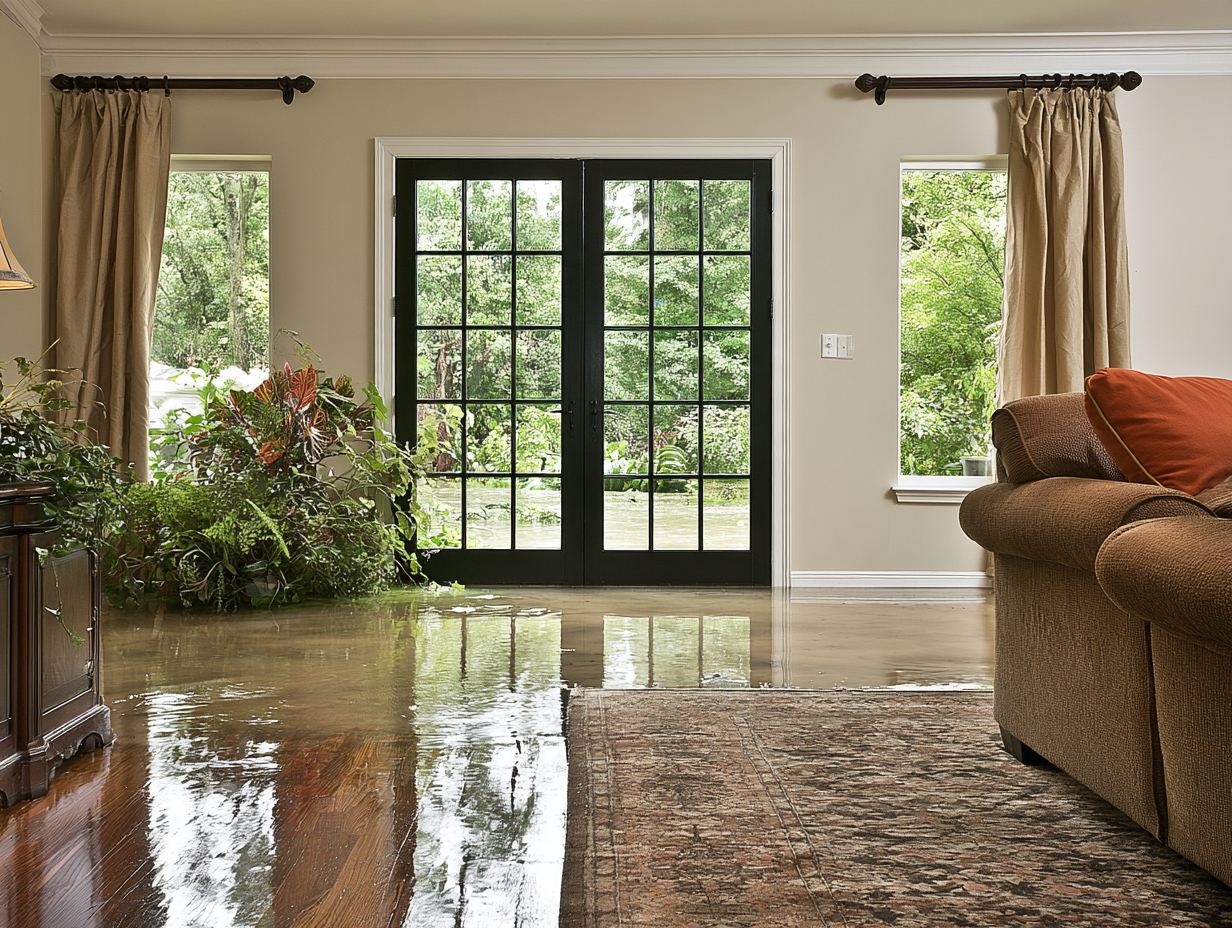
It's usually the second question people ask after "how do I stop this?" The short answer: often yes, sometimes no, and it depends on how the water got in. Here's how coverage typically works for Oregon homeowners, and how to give your claim the best chance.
This article is general information, not insurance or legal advice. Your policy wording is what counts. Read it and talk to your insurer or agent.
Sudden vs. Gradual: The Distinction That Matters Most
Most standard homeowners policies (the common HO-3 form, for example) are built around one idea: they cover damage that's sudden and accidental, and they don't cover damage that happens gradually or from lack of maintenance.
- Sudden and accidental: a pipe bursts, a washing machine hose splits, a water heater tank fails, a toilet supply line breaks. Usually covered.
- Gradual: a slow drip under the sink for months, a roof that's leaked a little every winter, a shower pan that's been seeping into the subfloor. Often excluded, because the insurer sees it as a maintenance issue.
That's one reason to act fast. A covered sudden loss can become a partially denied claim if the damage is allowed to spread or sit.
What Standard Policies Usually Cover
When the cause is sudden and accidental, policies commonly cover:
- Water extraction and structural drying
- Removing and replacing damaged drywall, flooring, insulation and cabinets
- Damaged personal belongings (under personal property coverage)
- Additional living expenses if the home isn't livable during repairs
- Sometimes, the cost to access the broken pipe (opening a wall), though not always the pipe repair itself
What's Usually Excluded
- Flooding from outside water. Rising rivers, surface water and storm runoff entering the home are typically excluded from homeowners policies. That requires separate flood insurance.
- Groundwater and seepage through foundations, often excluded.
- Sewer and drain backups, often excluded unless you've added a water backup endorsement.
- Long-term leaks, wear and tear, and neglect.
- Mold, which is frequently limited or excluded unless it results directly from a covered water loss.
Water damage happening now?
Call (541) 230-7203 to get connected with a local contractor.
Call (541) 230-7203Flood Insurance in the Willamette Valley
In the Mid-Willamette Valley, the line between "water damage" and "flood" matters. Homes near the Willamette, Marys, Calapooia, Santiam or Long Tom rivers, in river towns like Albany, Jefferson and Harrisburg, can be affected when long storms push rivers and groundwater up. If outside water comes in at ground level, a homeowners policy usually won't cover it.
Flood coverage is available through the National Flood Insurance Program (NFIP) and some private insurers. Policies often have a waiting period before they take effect, so it's something to set up well before the wet season. You can check your property's flood zone on FEMA's flood map service.
The Sewer Backup Endorsement
Older neighborhoods in Corvallis and Albany have older sewer laterals, and heavy rain can overwhelm drains. If your policy doesn't include water backup coverage, ask your agent about adding it. It's usually an inexpensive endorsement relative to what a sewage cleanup costs.
How to File a Strong Claim
- Stop the water and prevent further damage. Most policies require "reasonable steps" to protect the property. Getting the water out quickly is part of that.
- Document everything with photos and video before cleanup, including the source.
- Call your insurer promptly and get a claim number.
- Keep receipts for emergency supplies, repairs and hotel stays.
- Don't throw anything away until the adjuster has seen it or tells you it's okay. Photograph and keep samples of removed materials if needed.
- Get professional moisture documentation. Restoration contractors record moisture readings and drying progress, which adjusters often want to see.
- Read the adjuster's scope of loss carefully and ask questions about anything you don't understand.
Common Reasons Water Damage Claims Get Denied
Knowing why claims are denied can help you avoid it:
- Delay in reporting. Waiting days or weeks to report can raise questions about how much damage was caused by the delay.
- Failure to mitigate. If water was left sitting and caused mold or more damage, the insurer may not cover the added loss.
- Long-term leak. Evidence of rot, staining or mold that took months to develop suggests a gradual problem.
- Excluded cause. Outside flooding, groundwater or sewer backup without the right coverage.
- Lack of documentation. No photos, no moisture readings and no record of what was removed.
Most of these come down to the same advice: act fast, document everything and get the water out promptly.
Questions to Ask Your Adjuster
- Is this loss covered, and under which part of my policy?
- What's my deductible for this claim?
- Do I need your approval before work begins?
- Am I free to choose my own restoration contractor?
- Is mold remediation covered if it results from this loss?
- Does my policy include additional living expenses?
- What documentation do you need from the contractor?
The Bottom Line
Insurance often helps with water damage, but coverage depends on the cause, your policy and how quickly the damage was addressed. Fast action protects both your home and your claim.
If you need water removed or a home dried out, call (541) 230-7203 to get connected with an independent local contractor for emergency water extraction or water damage restoration. More on water damage in Corvallis.
What to Do in the First 24 Hours After Water Damage
A step-by-step checklist to stop the water, stay safe, protect your insurance claim and prevent mold.
How to Choose a Water Damage Restoration Company in Corvallis
A checklist for licensing, certification, insurance and the questions to ask.